
DRAFT 1.1 • PILOT CAPSTONE • NOT THE DIPLOMA
Run Your Life
Can a graduate use what school taught to manage a realistic adult life?
Pilot status
Run Your Life is a pilot assessment model, not the diploma and not a current graduation requirement. It should not become a high-stakes condition for graduation unless it is fully specified, piloted, evaluated for reliability and accessibility, and formally adopted through an appropriate public process.
The idea
A high-school diploma should represent more than attendance and accumulated credits. This pilot tests whether students can integrate reading, mathematics, judgment, practical knowledge, and communication in a realistic adult scenario.
What a pilot student would do
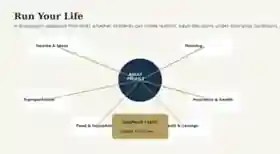
- Calculate gross and net pay and interpret payroll deductions.
- Complete a simulated federal and Minnesota tax return.
- Build monthly and annual budgets.
- Compare housing and transportation options.
- Evaluate credit, interest, insurance, and retirement choices.
- Plan groceries, meals, and routine household expenses.
- Read contracts, leases, policies, and instructions.
- Prepare a resume and complete a simulated interview.
- Navigate a realistic healthcare decision.
- Identify the correct government entity for common public issues.
Then reality changes
After the initial plan is complete, the scenario changes: a vehicle fails, rent increases, employment changes, healthcare costs shift, or an unexpected opportunity appears. The student must adapt. Adult competence is not simply making a plan; it is revising one when reality changes.
Pilot scoring
| Competency | Illustrative weight |
|---|---|
| Reading & comprehension | 20% |
| Quantitative reasoning | 25% |
| Evidence & judgment | 20% |
| Practical execution | 20% |
| Communication | 15% |
What must be learned before high-stakes use
- Does the scoring produce consistent results across schools and evaluators?
- Can students with disabilities and English learners demonstrate the intended competencies with appropriate supports?
- Does the pilot measure adult competence rather than family income, prior exposure, or unrelated background advantages?
- How much instructional time does preparation consume?
- Which parts predict later postsecondary, workforce, or independent-living outcomes?
Policy relationship
The authoritative Draft 1.1 policy is MLP-POL-07 — Graduation Competency. It allows applied demonstrations but does not make this pilot a required diploma condition.
See Measurement & Accountability or return to Grades 9–12.

